
Best Knowledge Base Software: August 2026 Review
Confluence, Notion, Help Scout, Helpjuice, and Zendesk solve different jobs. Ranked by internal wiki vs all-in-one workspace vs inbox-bundled docs vs dedicated help center vs ticket-suite, and what a $5 to $55 seat keeps after the $249 floor.

A knowledge base is not a form builder. It is not a folder of meeting transcripts.
It is a published, searchable source of truth that answers the same question the same way the next time someone asks, internally, on a public help center, or inside a ticket queue. Confluence, Notion, Help Scout, Helpjuice, and Zendesk are not rivals for the same meter.
Key Takeaways
- Rank by job, not a single best badge: internal wiki, workspace-as-wiki, inbox-bundled Docs, dedicated help center, or ticket-suite knowledge.
- The market splits five ways: Confluence, Notion, Help Scout, Helpjuice, Zendesk Suite.
- Stickers hide billing units. Confluence Standard is $5.42/user yearly. Notion Plus is $10/member; Business is $20. Help Scout Standard is $25/user yearly, capped at 25 users. Helpjuice starts at $249/mo for 30 users. Zendesk Suite Team is $55/agent yearly.
- Zendesk's 2026 CX report is why a public help center exists. 85% of CX leaders say customers will drop a brand that cannot resolve on first contact; 74% of consumers now expect 24/7 service because of AI.
- A Typeform FAQ is not a knowledge base. A form collects rows. This product publishes answers, versions them, and lets search find them next Tuesday.
What knowledge base software is (and what it is not)
The product is a closed loop: question, article, findability, next question without a human. That is not employee engagement software (how work feels).
Two jobs share the label:
- Internal wiki / handbook (Confluence, Notion)
- Customer help center (Helpjuice; also Help Scout Docs and Zendesk Suite as inbox or ticket side effects)
Buy Notion for a public SEO help center with localization and you rebuild the product. Buy Helpjuice for an internal page tree and you overpay versus Confluence at $5.42.
How we ranked
Five checks, not a composite score:
- Job fit
- Published price (official pages checked 20 August 2026; annual rates first)
- Who gets billed (member vs support user vs agent vs platform floor)
- Free-tier / floor reality
- Real annual cost at 10 / 25 / 100 billed users
The ranking: 5 knowledge base platforms
| Tool | Type | Starting price | Best for | Main trap |
|---|---|---|---|---|
| Confluence | Internal wiki | Free (10 users); Standard $5.42/user/mo yearly; Premium $10.44 | Teams that want a page tree, permissions, and a published seat | Free has no space/page permissions; it is not a branded help center |
| Notion | Workspace-as-wiki | Free (limited team blocks); Plus $10/member/mo; Business $20 | Startups already living in Notion | Plus AI is a trial; SSO and Agent are Business |
| Help Scout | Inbox-bundled Docs | Free (5 users, 1 Docs site, 10 articles); Standard $25/user/mo yearly (max 25) | Small support teams that need a shared inbox and a help center | Standard stops at 25 users; extra Docs sites are $20/mo |
| Helpjuice | Dedicated help center | $249/mo (30 users); $449/mo (100 users + AI); $799/mo unlimited | A public, branded knowledge base as the product | The floor is $249, not a $5 seat |
| Zendesk | Ticket-suite knowledge | Support Team $19/agent/mo yearly; Suite Team $55 (includes Knowledge Base) | Support orgs that already need tickets, messaging, and AI agents | $19 is not the help-center SKU; you are billed per agent |
1. Confluence
About the tool
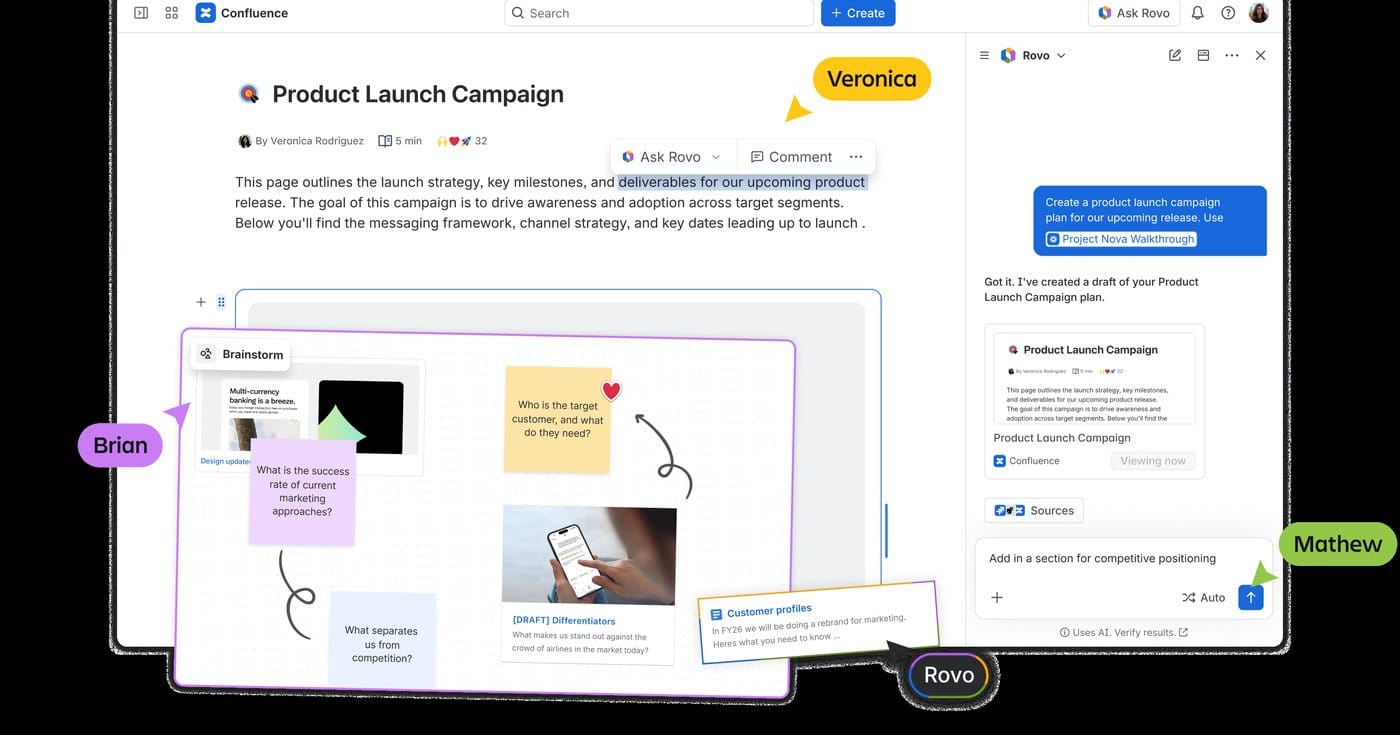
Confluence is the cheap published wiki when the job is an internal source of truth with a page tree, versioning, and a number you can put in a budget. Free forever covers 10 users, but with no space or page permissions. Anonymous access and public links start on Standard. It is still a wiki theme, not Helpjuice's branded help center, and Atlassian Guard (SSO, SCIM) is a separate subscription until Enterprise.
Main features
- Pages, spaces, databases, and version history
- Advanced permissions, guests, public links, and anonymous access on Standard
- Rovo credits on Standard
- Company hub, 24/7 critical support, and 99.9% SLA on Premium
- Unlimited storage on Premium; Enterprise is custom and annual only
Pricing
- Free: $0 forever for 10 users, 2 GB, community support (no space/page permissions)
- Standard: $5.42 per user per month billed annually; Rovo 25 credits / 100 indexed objects per user per month; guests up to 5 per paid user; 250 GB
- Premium: $10.44 per user per month billed annually
- Enterprise: custom, annual only
Pros
- Lowest published internal-wiki seat in this ranking
- Permissions and public-link path land on Standard, not a mystery SKU
- Guests on Standard can stay free within the stated ratio
Cons
- Free has no space or page permission settings
- Anonymous access is not a branded customer help center
- Guard SSO/SCIM is separate until Enterprise
2. Notion
About the tool
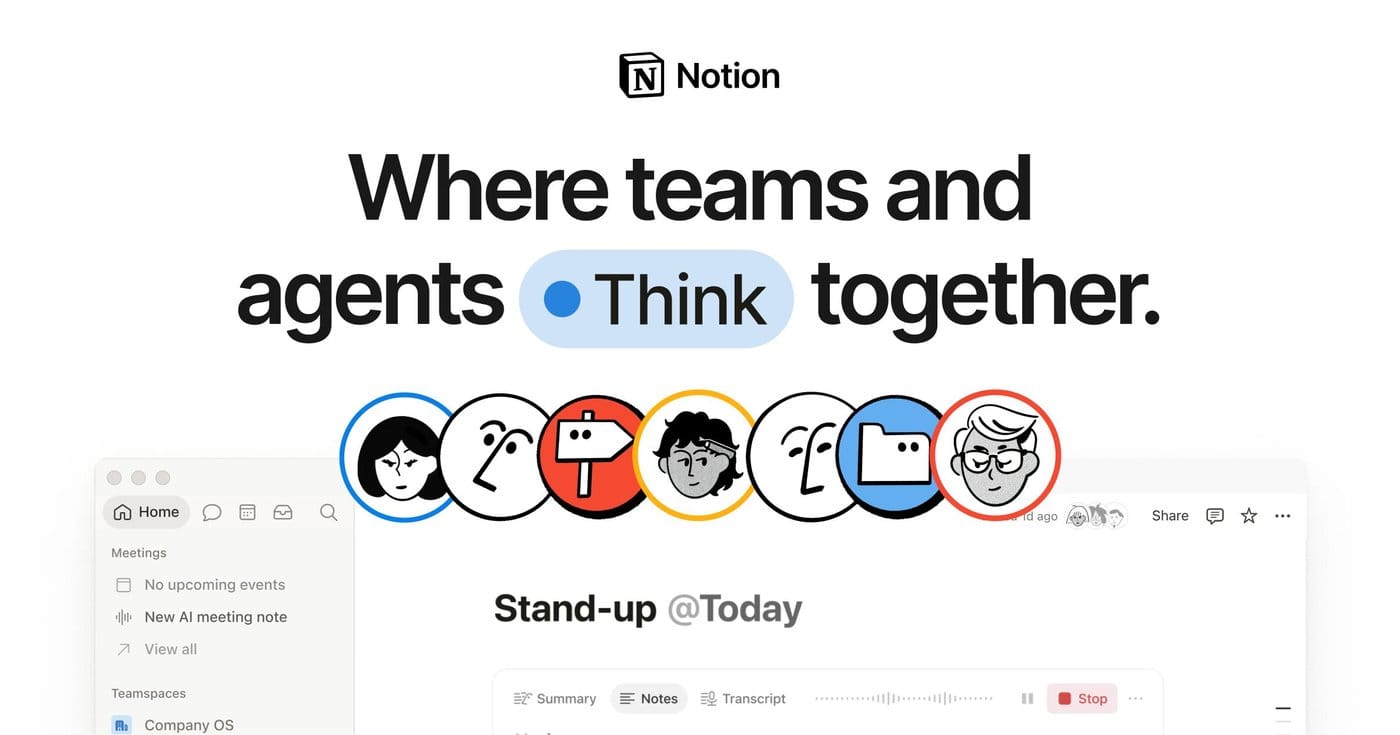
Notion fits when the wiki is one database among tasks, docs, and meeting notes, and the team will actually live there. Plus is $10 per member. SSO, private teamspaces, and Notion Agent sit on Business at $20, not Plus. A published Notion site is a public page (custom domain extra), not a help center with restricted customer logins. If customers must search it at 2 a.m., you are in the Helpjuice column.
Main features
- Docs, databases, and teamspaces in one workspace
- Unlimited collaborative blocks and uploads on Plus
- Notion Agent, AI Meeting Notes, Enterprise Search, and SAML SSO on Business
- Custom Agents metered by credits after trial
- Optional custom domain for public sites
Pricing
- Free: unlimited for one person; block-limited once two or more members share a workspace
- Plus: $10 per member per month; Notion AI listed as a trial on Plus
- Business: $20 per member per month (Agent, SSO, private teamspaces)
- Enterprise: custom (SCIM, audit log)
- Custom Agents: $10 per 1,000 credits after the trial
- Custom domain: $8/mo billed annually, or $10 monthly
Pros
- Best path when the handbook already lives inside the company workspace
- Business packs SSO and Agent without a separate wiki vendor
- Flexible databases beat a rigid page tree for mixed work
Cons
- Plus AI is a trial; Agent and SSO need Business
- Public site is not a localized help center with article workflows
- Free becomes block-limited as soon as a second member joins
3. Help Scout
About the tool
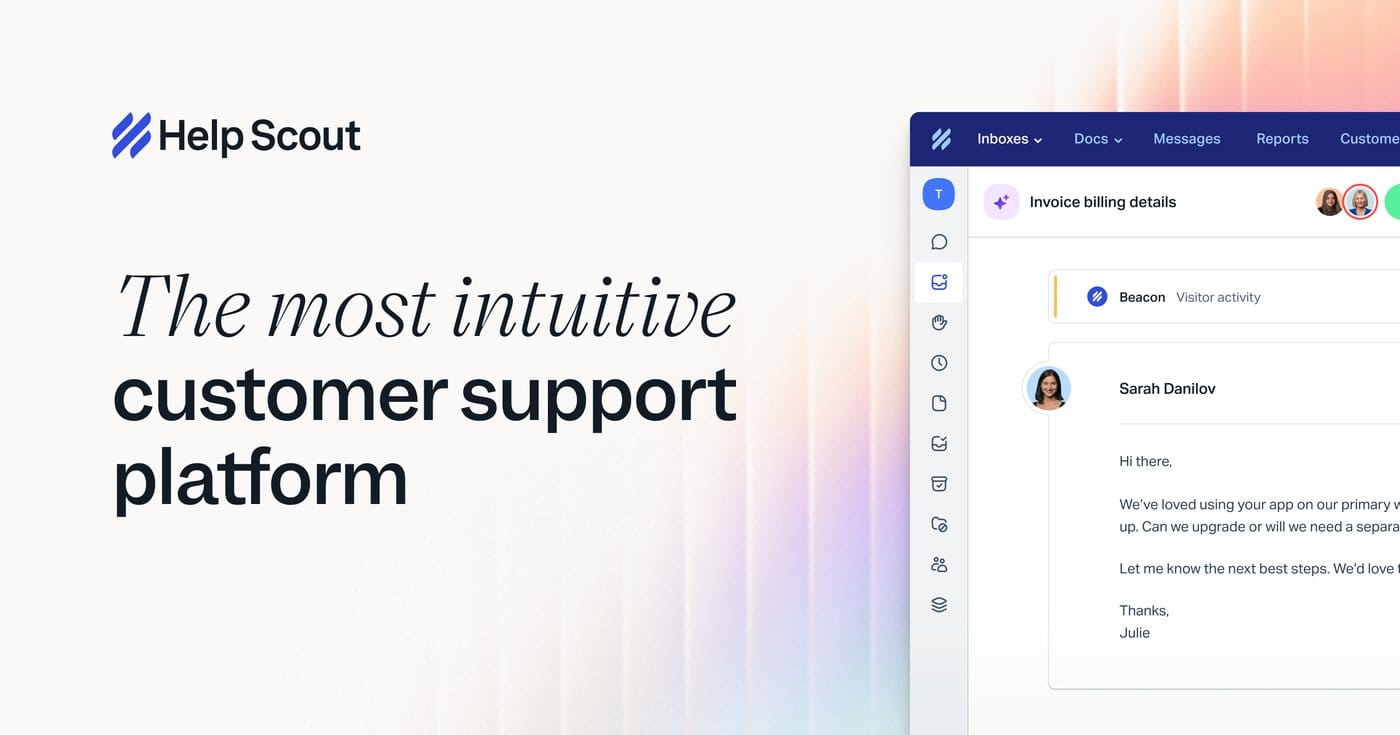
Help Scout is the inbox-bundled Docs buy when a small support team needs one shared inbox and one help center, and 25 people is the ceiling for a while. Free covers 5 users, 1 Docs site, and 10 articles. Standard is $25 per user yearly with a hard 25-user cap and extra Docs sites at $20/mo. It is the wrong buy as the company wiki for 80 employees; Confluence at $5.42 undercuts $25 before you count an inbox you may not need.
Main features
- Shared inbox plus Docs sites
- Free: 5 users, 1 Inbox, 1 Docs site, 10 articles
- Standard: max 25 users, 2 Docs sites, unlimited articles
- Plus and Pro raise user caps; Pro adds SSO/SAML and HIPAA
- AI Answers billed per resolution
Pricing
- Free: $0 for 5 users, 1 Docs site, 10 articles
- Standard: $25 per user per month billed annually, max 25 users; 2 Docs sites (extras $20/mo yearly)
- Plus: $45 per user (max 50)
- Pro: $75 per user (unlimited users, minimum 10; SSO/SAML, HIPAA)
- AI Answers: $0.75 per resolution
Pros
- Clean combo of inbox and help center for small support teams
- Free is enough to prove Docs with 10 articles
- You bill support users, not readers
Cons
- Standard stops at 25 users
- Extra Docs sites are $20/mo
- Wrong meter for an 80-person company handbook
4. Helpjuice
About the tool
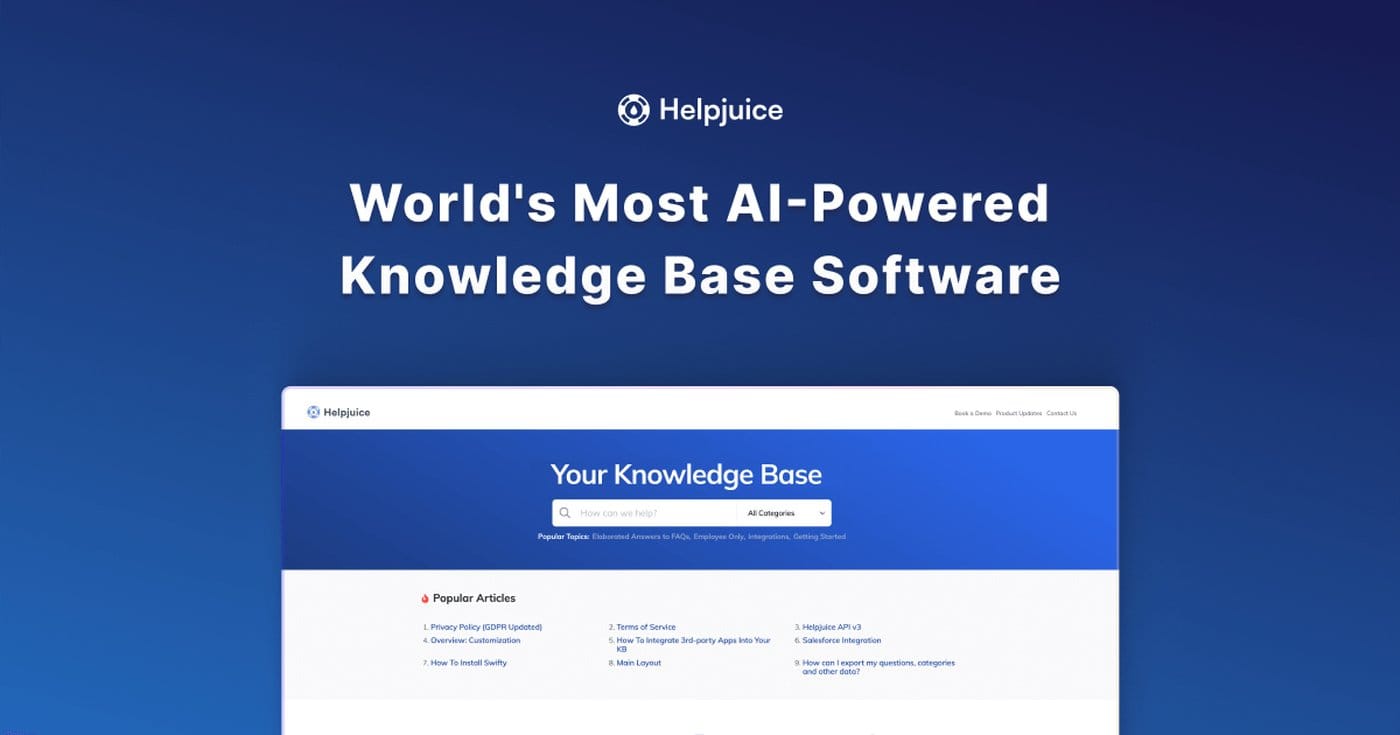
Helpjuice is the dedicated public help center when localization, article workflows, and search-miss analytics are the product. Knowledge Base starts at $249 per month for 30 users. Ten people still pay $249 ($24.90 a login). Confluence Standard for 10 is $54.20 a month. Helpjuice wins on the public site and search analytics, not on an internal page tree. SSO is not on the $249 plan. A user is anyone with credentials to log into the KB, not a public reader.
Main features
- Public branded knowledge base with localization
- AI translation on the base plan
- AI Writer / Search / Chatbot and SSO on the AI tier
- Analytics on what people searched and missed
- 14-day trial with no card
Pricing
- Knowledge Base: $249/mo for 30 users, 12 GB, localization, AI translation
- AI-Knowledge Base: $449/mo for 100 users, SSO, AI Writer/Search/Chatbot
- Unlimited: $799/mo
- 14-day trial, no card
Pros
- Built for a public, branded help center as the product
- Search-miss analytics and localization beat a wiki public link
- Clear platform floors instead of fake $5 seat math
Cons
- $249 is the floor even for ten people
- SSO sits on the $449 plan
- Expensive as an internal-only page tree versus Confluence
5. Zendesk

About the tool
Zendesk is the ticket-suite knowledge buy when you already need tickets, messaging, and an AI agent, and the help center should feed that queue. Support Team at $19 is ticketing. The named Knowledge Base ships on Suite Team at $55 per agent yearly. Ten agents on Suite is $6,600 a year before Copilot. If you do not need the queue, you bought a contact center to get a wiki. CX Trends 2026 first-contact numbers explain why Suite exists; they are not a reason to put the employee handbook in Zendesk.
Main features
- Ticketing, routing, and macros on Support Team
- AI Agents, named Knowledge Base, messaging, and telephony on Suite Team
- Higher Suite tiers and Copilot add-on
- Agent metering (not reader metering)
- Annual billing at about 20% off monthly
Pricing
- Support Team: $19 per agent per month paid yearly (ticketing only)
- Suite Team: $55 per agent per month billed yearly (includes Knowledge Base)
- Suite Professional: $115 per agent per month
- Copilot: $50 per agent
- Annual is about 20% off monthly
Pros
- Knowledge sits next to tickets, messaging, and AI agents
- Right buy when the queue is already the product
- Clear Support vs Suite SKU split once you know $19 is not KB
Cons
- $19 Support Team is not the knowledge-base SKU
- Agent metering makes 10 seats $6,600/yr on Suite before Copilot
- Overkill for an internal handbook with no ticket machine
Worked annual cost at three headcounts
Assumptions: U.S. company, annual billing where published. Confluence Standard. Notion Plus. Help Scout Standard until 25 users, then Pro at 100. Helpjuice $249 until 30 users, $449 at 100. Zendesk Suite Team. Quote-only vendors omitted.
| Headcount (billed users) | Confluence Standard | Notion Plus | Help Scout | Helpjuice | Zendesk Suite Team |
|---|---|---|---|---|---|
| 10 | $650 | $1,200 | $3,000 | $2,988 | $6,600 |
| 25 | $1,626 | $3,000 | $7,500 | $2,988 | $16,500 |
| 100 | $6,504 | $12,000 | $90,000 (Pro $75) | $5,388 | $66,000 |
At 25 billed people, Confluence is $1,626, Help Scout $7,500, Zendesk $16,500, and Helpjuice still $2,988 because it meters a platform, not a roster. At 100 people, Help Scout Pro is $90,000 if those 100 are users. They should not be. Bill agents. Put the handbook on Confluence.
When it breaks
The billing unit is not the job:
- Confluence and Notion meter members
- Help Scout meters support users against a 25-person Standard cap
- Helpjuice meters a $249 month
- Zendesk meters agents
A wiki is not a help center. Confluence anonymous access and a Notion public site are not Helpjuice. A form or a transcript is not an article. The $19 Zendesk invoice is not a help center; Knowledge Base is Suite at $55.
Best Firms' take
Best Firms' take: buy the meter that matches the knowledge job. Confluence when the object is a cheap internal wiki with permissions on Standard. Notion when the handbook can stay inside the workspace and Business is acceptable for SSO and Agent. Help Scout when a small support team needs one inbox and one Docs site under 25 users. Helpjuice when a public branded help center is the product and $249 is the real floor. Zendesk Suite Team when knowledge must feed tickets at $55/agent, not Support Team at $19. Treating all five as interchangeable "$10 knowledge base" options is how finance inherits a $249 platform floor or a contact-center seat tax for a handbook.
Named downside: Free permissions cliffs and the $19 Zendesk SKU that is not KB. Fail the floor, change lanes.
Frequently Asked Questions
What is the best knowledge base software in 2026?
There is not one. Confluence Standard at $5.42 yearly for an internal wiki. Notion Plus at $10 (Business at $20 for SSO and Agent). Help Scout Standard at $25 for a small support team with Docs. Helpjuice at $249 a month for a dedicated public help center. Zendesk Suite Team at $55 when knowledge has to feed tickets.
Is Notion or Confluence better as a company wiki?
Confluence is the cheaper published wiki, with permissions on Standard. Notion is the workspace you may already pay for; SSO and Agent sit on Business at $20, not Plus at $10. Confluence Free's missing permissions are the deal-breaker past a handful of pages.
Is there a good free knowledge base?
Confluence Free: 10 users, no space/page permissions, 2 GB. Notion Free: fine for one person; block-limited for a team. Help Scout Free: 5 users, 10 articles, one Docs site. Helpjuice and Zendesk Suite are paid. A public Google Doc is not a knowledge base.
How is a help center different from a wiki?
A wiki is for people with logins (handbook, runbooks). A help center is for customers who should not need a seat. Zendesk's finding that 85% of CX leaders will lose a customer over one unresolved first contact is a help-center number. Putting that pressure on a Notion page is the wrong buy.
Closing
Monday move: write the job first.
- Internal handbook, public help center, or help center attached to tickets
- Internal and cheap: Confluence Standard at $5.42 yearly (Free only if 10 people and you accept no permissions)
- Already in Notion, and the wiki can stay a workspace: Plus at $10 (Business at $20 for SSO and Agent)
- Small support team, one inbox, one Docs site: Help Scout Free for 5 and 10 articles; Standard at $25 until 25 users
- Public help center as the product: Helpjuice at $249 (do not compare that floor to a $5 wiki seat)
- You need the queue anyway: Zendesk Suite Team at $55 (not Support Team at $19)
Fail the floor, change lanes.